

Welcome to The Mode/Switch Pod…
When your team’s feeling sad or exhausted or angry on the clock, you need to get them off the clock—right?
Tell them to take PTO already. Tell them to take a vacation. Tell them to have a nice weekend. (Sometimes you want to tell them to resign.)
But all these choices seek emotional health outside of work.
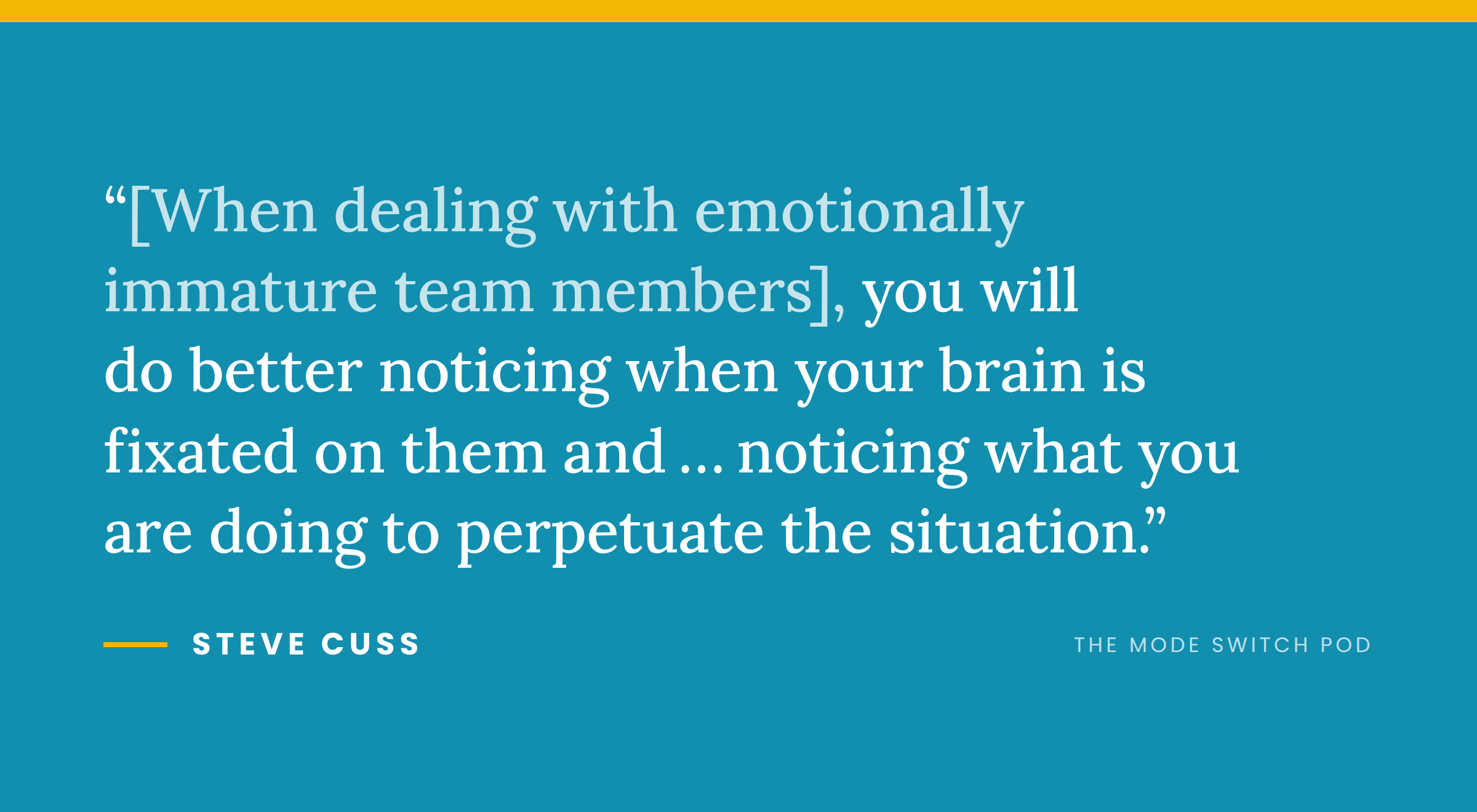
Steve Cuss asks, why can’t we take steps to feel better at work?
As it turns out, you can. In a frank conversation with Steve, the author of Managing Leadership Anxiety: Yours and Theirs, we Mode/Switchersexplore how to practice emotional health in the pressurized middles of organizations.
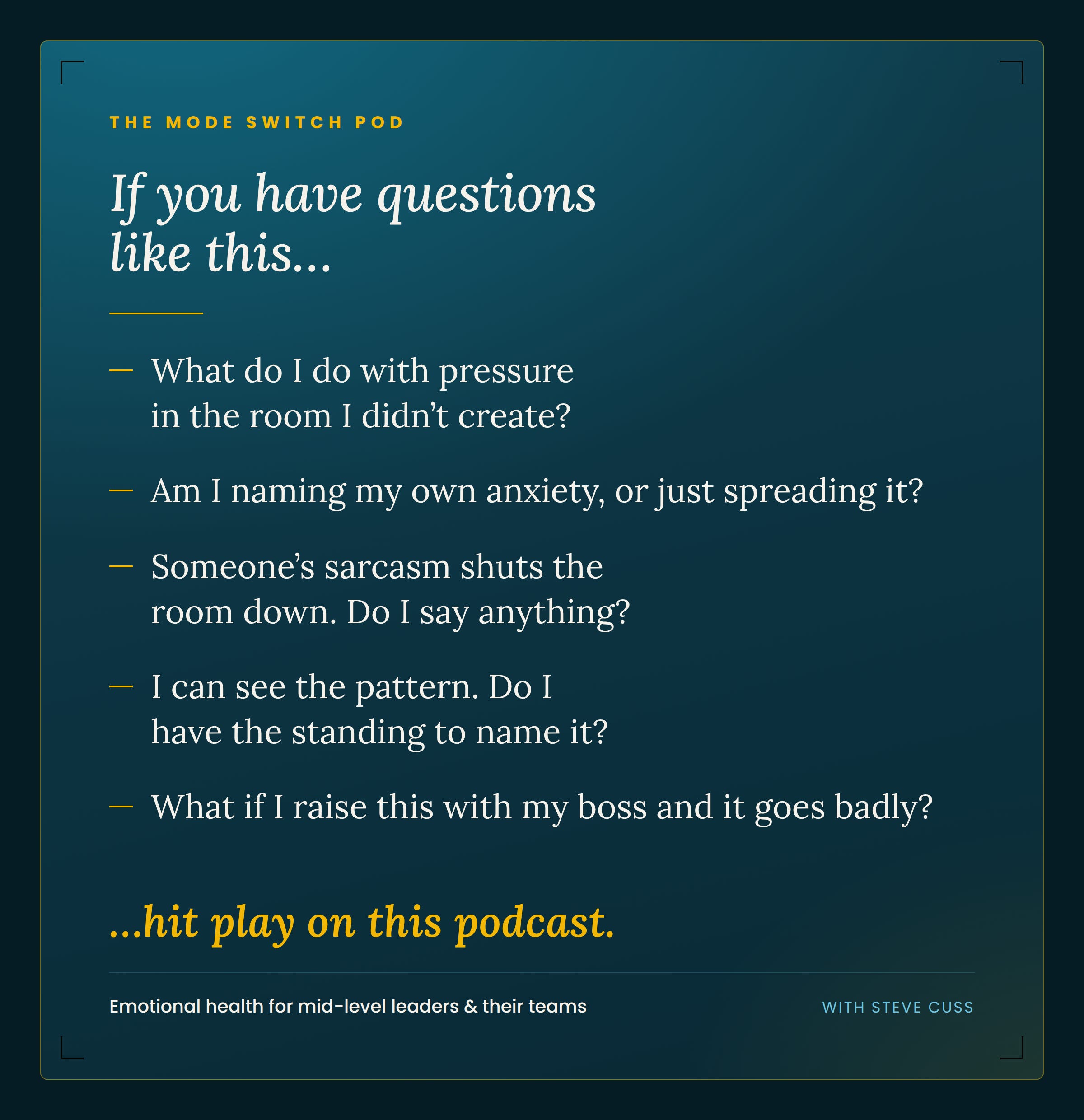
You’ll learn how to ask 4 questions to find the emotional patterns at play in a given situation. You’ll hear a script for dealing with sarcasm.
You’ll listen to Steve’s response when a mid-level leader confronted him about muting his own team.
Mostly, you’ll enjoy a half-hour intergenerational conversation that helps you, as a mid-level leader, do more than cope when work’s a lot.

Podcast Table of Contents:
Segment 1 — Intergenerational discussion
02:36 — The sponges, the oblivious, and the dangerous.
07:29 — Scripting what to say when someone slices others in a meeting.
12:30 — Asking 4 questions to expose your team’s emotional pattern.
14:53 — Sharing how Steve’s team confronted him about his combativeness.
16:05 — “The only thing worse than talking about it is not talking about it.”
17:24 — Approaching feelings from different intergenerational places.
Segment 2 — This week’s Mode Switch
Segment 3 — The roundtable follow-up
22:12 — The catch: Steve assumes a boss who’ll receive feedback. What if yours won’t?
24:03 — Ken on quitting your job: “It might be an open door, but it leads to an abyss.”
24:16 — Madeline on feelings and Gen Z: “I’d rather name it than hide it.”
24:38 — Josh on Black-and-Brown code-switching: “You probably won’t get all of me.”
26:16 — Can you afford four hours of emotional care for your team each month?
28:14 — We need psychic caffeine.

Our guest, Steve Cuss, hosts his own program called “Being Human.”


