


For the past four years, I have been losing sensation in my feet. At first, they felt prickly and tingly. Then my soles started to deaden. These days, I hate to go without socks and slides around the house. Barefoot, I flap about on dead hobbit feet.
My doctor has diagnosed neuropathy and cautions that I might never find a cure. She sent me to a neurologist who poked my feet with a needle and then said, “Yep. Let us know if you start to lose feeling in your legs.”
I generally trust doctors. I prefer evidence-based care. I was even willing to take B12 shots in my butt to heal nerves in my feet. But at the end of the day, mainstream medicine has told me, “You’re probably gonna have to live with this.” So, this weekend, I’m trying a non-traditional treatment from a “neuropathy survivor.” At a seminar I attended, she kept saying, “This is not snake oil.” Methinks the expert doth protest too much.
But I need a second opinion.

What managers sense and senior leaders don’t
This might sound like a bad LinkedIn post with a dubious moral parable. But I think managers need second opinions, too, especially when it comes to insensitivity between senior leadership and employees.
Dayforce Research now reports that “Only 42% of frontline workers say leaders understand their challenges.” That represents a 20% decline in two years. But managers don’t need that research to know that senior leadership has lost a feel for what’s happening on teams and in workflows.
Nobody feels this organizational neuropathy as painfully as managers. But the usual prescriptions are unhelpful: Be candid. Be clear. Be sincere. Be resilient.
But even after managers do all these things, the “Communication Gap Between Leadership and Frontline Employees” continues. And managerial consultancy and coaching basically say, “You’re going to have to live with this.”
Seeking help with a new podcast concept
Feeling the weight of this problem, I reached out to a clinical psychologist, Dr. Irene Kraegel, of Dwell Psychological Services, and asked her if she’d be willing to help me address wicked organizational problems for mid-level managers. Over the summer, we started meeting for coffee in East Grand Rapids at Carrie’s Be Cafe. Here’s the podcast concept those conversations produced:
Once a month, we’ll welcome a mid-level manager to the table who’s experiencing a management problem—not a huge crisis, per se, but a puzzling challenge—and then discuss it, moving toward action steps. (Maybe checking back later to see how the action steps worked.)
This spinoff edition of The Mode/Switch would seek to help mid-level leaders make vital “reframes” in their work. We still call these “mode switches” but we’ll resource interdisciplinary expertise instead of the intergenerational wisdom the Mode/Switch Pod usually offers.
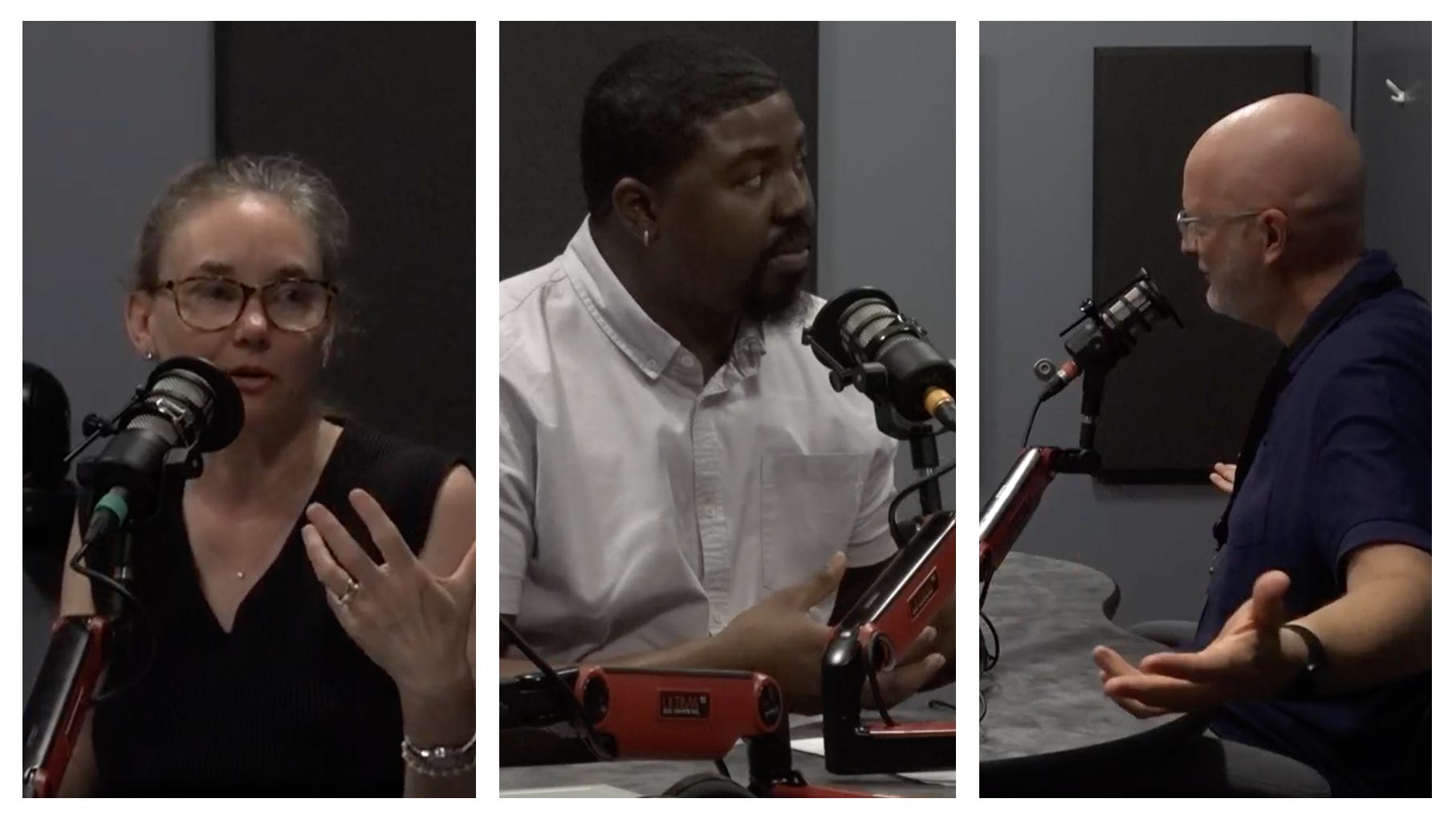
Dr. Irene Kraegel, psychologist. Dr. Shaq Anthony, org leader. And me, the comms researcher guy.
Welcome to Mode/Switch: Second Opinion!
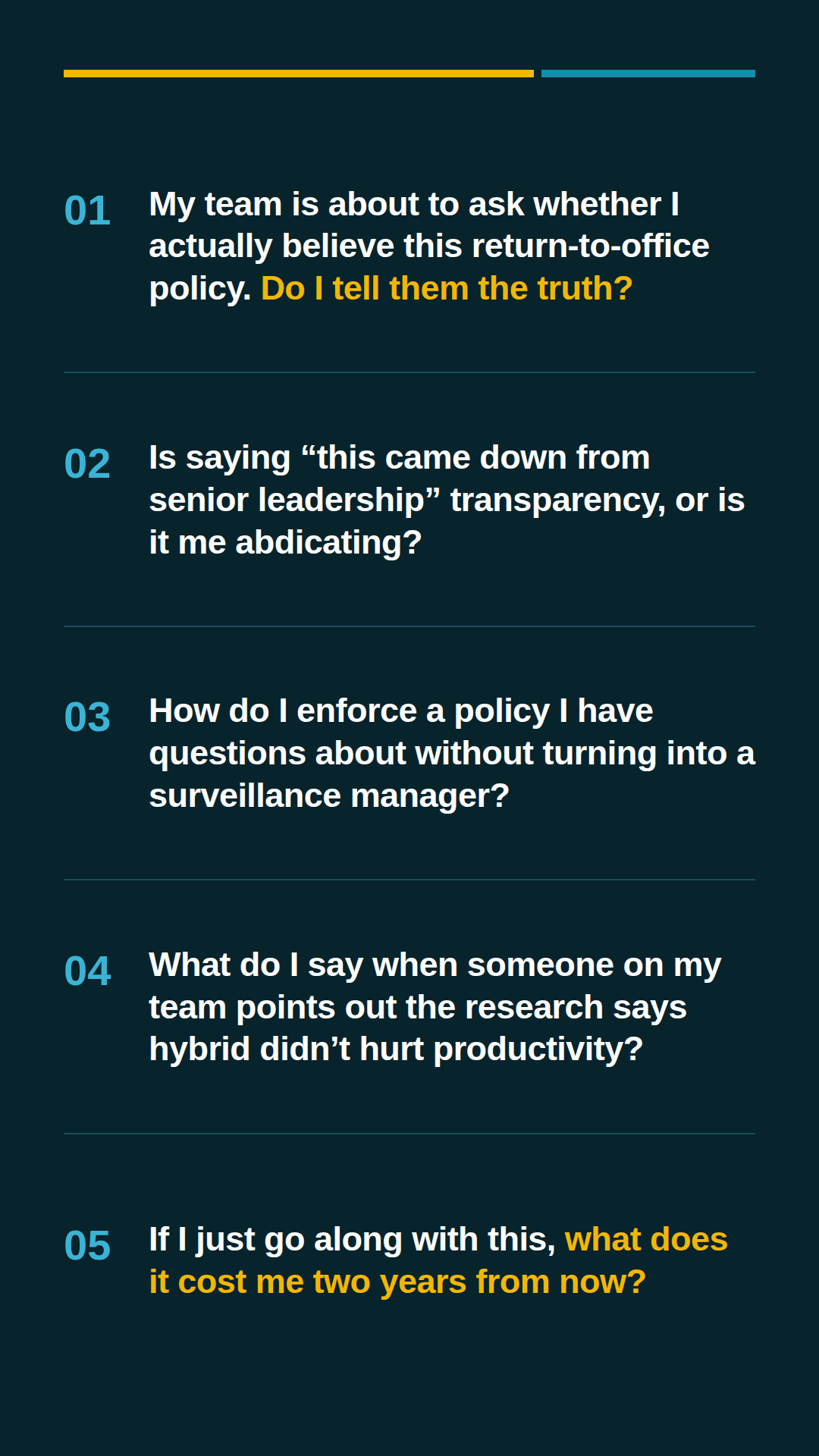
For this first episode, Irene and I sat down with Dr. Shaq Anthony, who serves as Lead Org Development Specialist at Corewell Health in Grand Rapids. And here’s the problem we worked on with Shaq: how can a mid-level manager communicate a policy to their team when she herself disagrees with it? (We used the case study of a return-to-office mandate.) And here are the kinds of questions our conversation addressed from psychological, communicational, and organizational perspectives:
For all you Mode/Switch fans, who’ve been with us for the 108 past episodes, you’ll still hear Ken, Emily, David, LaShone, Madeline each month bringing the intergenerational rum punch to the roundtable, still speaking to work-culture problems and possibilities.
But each month, you can also expect to hear from Mode/Switch: Second Opinion, as Irene and I work with various organizational leaders to restore nerve sensation in organizational communities.
Love to hear your thoughts on the new format. Listen and then comment below!


